


 IPM CPM Level 1


hamburger__close




Become a Certified Project Manager with a globally recognised project management diploma. Earn three competitive credentials and build job-ready competence across the full end-to-end project life cycle—integrating Agile approaches, practical AI tools, and sustainability practices you can apply immediately with confidence.

According to the PMI’s Talent Gap report, Australia will need to fill approximately 2.3 million new project-oriented roles annually through to 2030. Research shows that 73% of Australian project teams are currently understaffed, creating significant opportunities for qualified project managers. Key sectors driving demand include construction, information and communication technology, mining and resources, and the energy transition, with the Brisbane 2032 Olympics infrastructure programme further accelerating demand in Queensland.
Organisations with a strong Australian heritage may value PRINCE2 credentials, but for professionals targeting roles beyond Australia or in multinational environments, the IPMA-D® earned through the CPMD offers broader international portability. IPMA Australia is active in the local market, connecting global emerging practices to the Australian context and supporting PMO managers, change specialists, and project professionals across the country. The CPMD is fully online, self-paced, and requires no minimum experience, making it accessible whether you are entering the profession or formalising existing skills.

When this course is finished, you will be able to:
Learn how to organise your projects using the five process groups listed below when using a process-based project approach:
The purpose of the modules is to provide a thorough understanding of the various facets of project management while assisting you in identifying the two project management methodologies that are most frequently used (predictive and agile).
Develop the full spectrum of industry-ready competences that define an effective project manager:
Enrolment in this programme includes 12 months’ complimentary access to IPM Membership, supporting continued professional development beyond certification.
For participants taking the OnDemand / Self-Paced format, you will receive:
SEEK records the national average salary for a project manager in Australia at between AUD140,000 and AUD160,000, Glassdoor data from May 2026 puts the average at AUD130,000, with the 75th percentile at AUD170,000, and Indeed reports AUD140,723 as the average based on 2,000+ salaries as of 2026.
Typical salary ranges for project management professionals in Australia:


The national average salary for a project manager in Australia sits between AUD140,000 and AUD160,000, with senior professionals and programme managers earning significantly more. Entry-level roles start at around AUD104,727, rising to AUD165,745 for those with eight or more years of experience.
The most common domestic qualification in Australia is the BSB50820 Diploma of Project Management — an AQF-registered credential particularly valued by government employers, defence, and publicly funded organisations. The CPMD sits alongside it, not against it. Where BSB50820 is Australia-specific, the IPMA-D® earned through the CPMD is recognised across 70+ countries, giving professionals working in multinational environments a qualification that travels with them. Many Australian professionals hold both.
IPMA Australia connects global practices to the local context, supporting PMO managers, change specialists, and AI practitioners across the country, meaning IPMA-D® holders have access to a recognised local professional community, not just an international one. And unlike PMP, which requires 36 months of documented experience to even apply, the CPMD has no experience prerequisite.
Read our free guide on How to Build a Career in Project Management, and get everything you need to know about building a career in project management.

If you are unsure if this project management diploma programme suits you, feel free to Schedule a call to speak with our educational adviser.

With subtitles in Arabic, French, Chinese and Spanish – enjoy flexibility and control over your schedule with our OnDemand format.
 42 Hours of Learning
 24/7 Instant Access 6 Months of Full Access
 Expert-led Video Lessons
 13 Modules, 130+ Topics
 Online Quizzes & Exercises IPMA-D®, EQF Level 6, CPM Dip.

I completed the Certified Project Management Diploma and would highly recommend it to anyone considering working in this field. I came into this course not knowing very much about projects. However, I’m now leaving the course with a wealth of knowledge that I will be applying in my job.
 Reviews (100+)
On Demand Diploma provides you with greater flexibility and control over your schedules. It allows you to follow the learning pace that works best for you. It maximises efficiency by ensuring you have access to master the skills you need right when you need them.
42 Hours of Learning 24/7 Instant Access 6 Months of Full Access Expert-led Video Lessons 13 Modules, 130+ Topics Online Quizzes & Exercises IPMA-D®, EQF Level 6, CPM Dip. Subtitles Available in Arabic, French, Chinese & Spanish
This course is available for organisations looking to meet specific business needs, equipping your team with the skills to drive success.


 20 36 20
Get in depth information about the course and answers to frequently asked questions.
The course fee covers all costs associated with the exams and certifications, access to all course materials on the Student Hub, live virtual classes led by subject matter experts, recordings, and unrestricted help from our Student Support team.
There are two methods of payment:
The course is offered in three formats: live online, classroom, and On Demand. The live online and classroom formats meet once a week for three hours, whereas the On Demand format’s lectures are pre-recorded and can be accessed any time. Each format uses the same content, materials, and Student Hub.
The Certified Project Management Diploma programme is ideal for someone learning the fundamentals and critical project management methods. Any professional who directly contributes to projects, whether project managers now or in the future, should take this course.
Two written assignments — a self-assessment and a written project — and a 3-hour online exam with Multiple-Choice and Scenario-style questions are used to evaluate students’ progress in the course.
Classes take place once per week for three hours. The core material and reflecting on your learning should take 4 to 6 hours per week. As you can see, though, this greatly depends on each person’s ability.
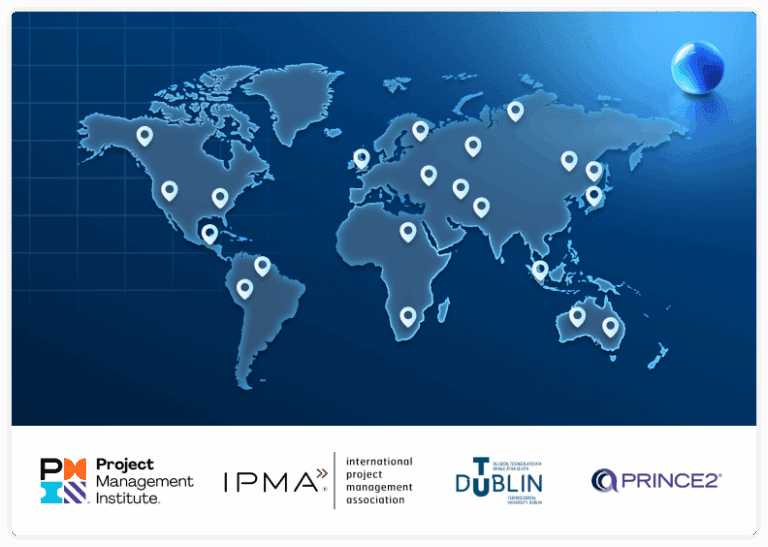
Yes, more than 70 countries recognise the course credentials.
Access key resources to enhance your learning and project management skills.


