All Courses
 Upcoming Course Dates
 Professional Courses
 Academy & Short Courses
 IPM Courses
 PMI Courses
 IPMA Courses
 PRINCE2 Courses
 Corporate Training
 Corporate Partnership
 Strategic Partnership
 IPM Competency Pathway
 Growth Partner
 Certification Overview
 IPMA Certification
 PMI Certification
 About IPM Hub
 IPM Membership
 EMEA Monthly Events
 Mentorship
 All Resources
 Expert Insights
 Ebooks & Toolkits
 Publish Your Writing
 IPM Jobs Portal
 The Institute
 Faculty
 Global Advisory Board
 Apply to Lecture or Volunteer
 Apply to Intern or Campus Ambassador
 Speak to an Advisor


hamburger__close


Agile methodologies transformed how organisations deliver projects and products. Rather than following rigid plans and delivering everything at the end, Agile approaches break work into smaller increments with continuous feedback and adaptation. This flexibility helps teams respond to change quickly whilst maintaining quality and customer satisfaction.

Whether you’re new to Agile or evaluating which methodology suits your organisation, this guide covers the core principles, popular frameworks like Scrum and Kanban, and practical advice for successful implementation.
Agile methodologies are iterative approaches to project management and product development that deliver value in small, frequent increments rather than single large releases. Teams work in short cycles, gathering feedback and adjusting plans based on what they learn.
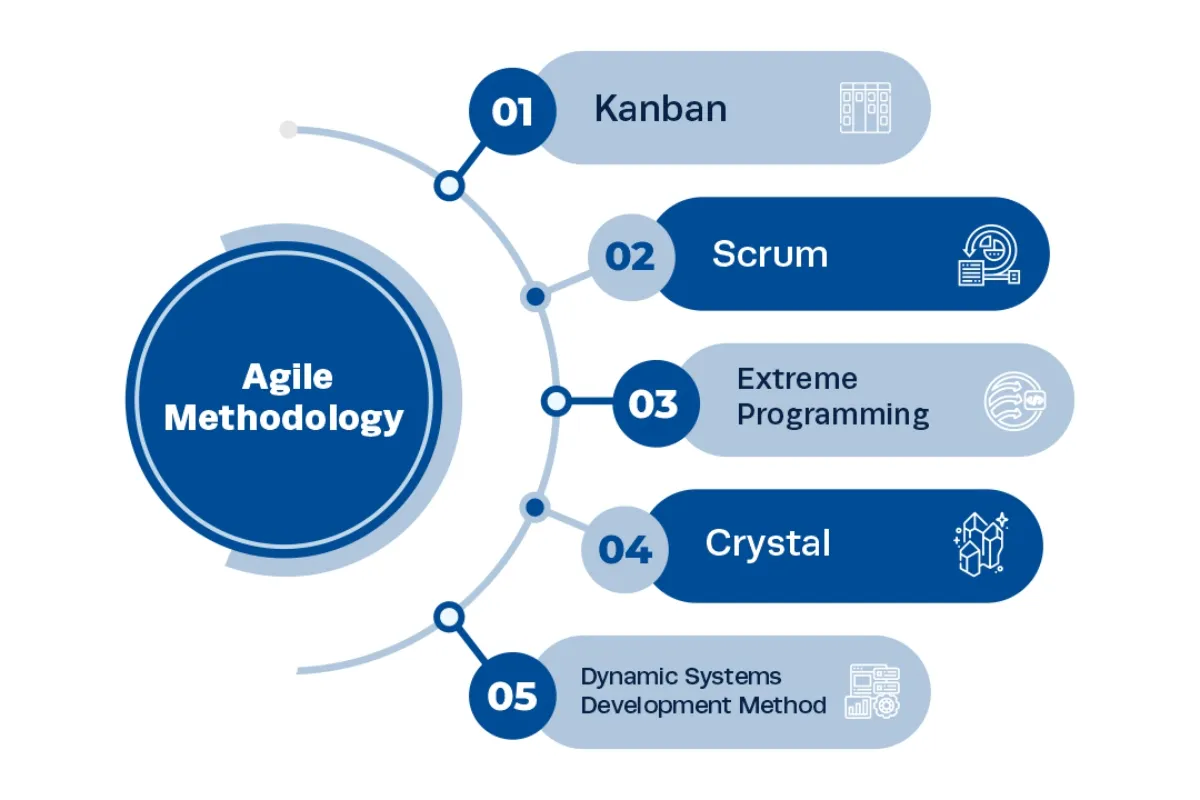
The Agile Manifesto was created in 2001 when seventeen software developers met to articulate principles for better development practices. However, Agile-style methodologies existed since the 1990s. Scrum emerged in 1995, Extreme Programming in 1999, and the Dynamic Systems Development Method in 1994. These approaches shared common characteristics: iterative development, customer collaboration, and rapid delivery.
Traditional project management follows sequential phases with detailed upfront planning. Agile methodologies instead embrace uncertainty and change as natural parts of development. Teams plan just enough to start work, then refine understanding through regular delivery and feedback. This approach works because customers often discover what they truly need by seeing and using working products, not by reviewing specifications.
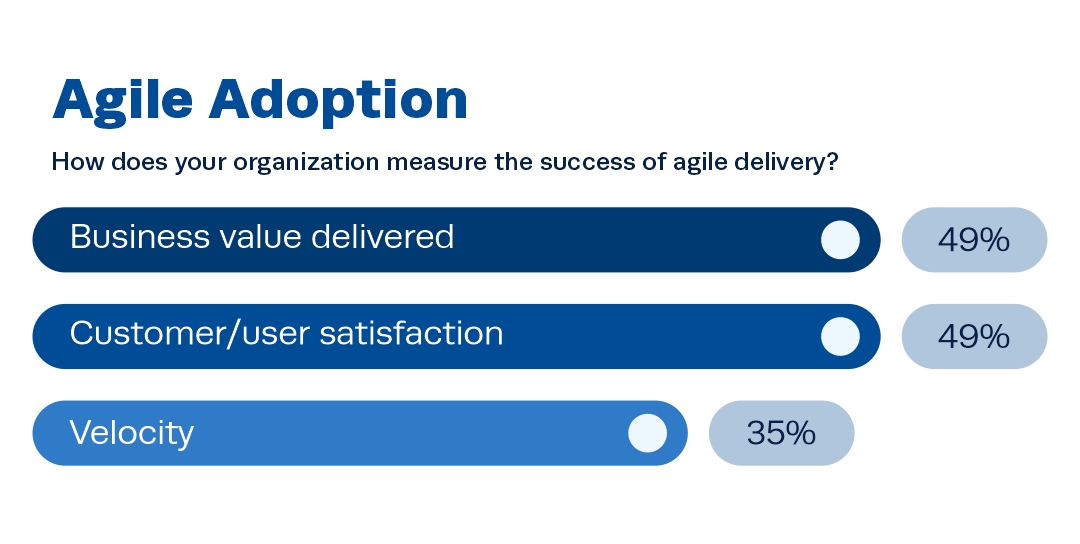
Companies implementing Agile methodologies report faster time to market, higher quality products, and better alignment with customer needs. The iterative nature allows teams to detect and fix problems early when corrections cost less. Regular delivery provides predictable progress whilst maintaining flexibility to adjust priorities based on market conditions or customer feedback.
Agile methodologies apply beyond software development. Marketing teams use them for campaign development, construction companies for project delivery, and financial services for product launches. Any work involving uncertainty, complexity, or evolving requirements benefits from Agile approaches.
The Agile Manifesto articulates four values and twelve principles guiding all Agile methodologies. Understanding these foundations helps teams apply Agile thinking regardless of which specific framework they choose.
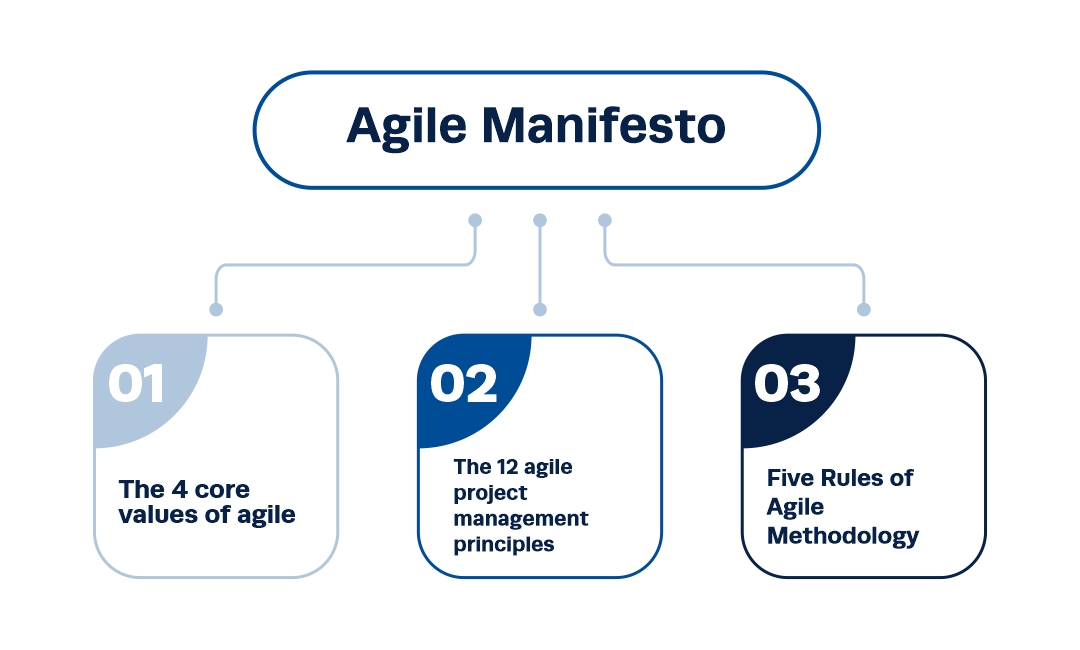
The manifesto states: “We have come to value individuals and interactions over processes and tools, working software over comprehensive documentation, customer collaboration over contract negotiation, and responding to change over following a plan.”
These values don’t eliminate the items on the right; they simply prioritise the items on the left.
The best tools become useless without skilled people using them effectively. Agile methodologies emphasise team collaboration and communication over rigid adherence to processes. When teams encounter problems, they discuss solutions rather than defaulting to documentation or waiting for tools to provide answers.
Traditional approaches required extensive documentation before development began. Agile methodologies streamline documentation to essentials, focusing effort on delivering functioning products. Documentation still exists but serves the team and customers rather than becoming an end itself.
Customers participate throughout development rather than only at the beginning and end. This ongoing collaboration ensures teams build what customers actually need, not what was specified months earlier when understanding was incomplete.
Markets shift, customer needs evolve, and competitive pressures emerge. Agile methodologies treat change as valuable feedback rather than scope creep. Teams plan enough to provide direction whilst remaining ready to adjust when circumstances warrant.
The manifesto outlines twelve principles supporting these values:
| Principle | Focus |
|---|---|
| 1. Customer satisfaction through early and continuous delivery | Frequent releases keep customers engaged and informed |
| 2. Welcome changing requirements, even late in development | Flexibility improves outcomes and competitive advantage |
| 3. Deliver working products frequently | Short cycles from weeks to months maintain momentum |
| 4. Business people and developers work together daily | Daily collaboration improves decision quality |
| 5. Build projects around motivated individuals | Trust and support enable high performance |
| 6. Face-to-face conversation is most effective | Direct communication reduces misunderstanding |
| 7. Working products are the primary measure of progress | Deliverables matter more than documentation or meetings |
| 8. Sustainable development pace | Teams maintain consistent velocity indefinitely |
| 9. Continuous attention to technical excellence | Quality enables agility and change |
| 10. Simplicity maximises work not done | Focus on essentials, avoid unnecessary complexity |
| 11. Self-organising teams produce best results | Autonomy drives innovation and ownership |
| 12. Regular reflection and adjustment | Continuous improvement through retrospectives |
These principles apply whether teams use Scrum, Kanban, or other Agile methodologies. Different frameworks emphasise different principles, but all share this common foundation.
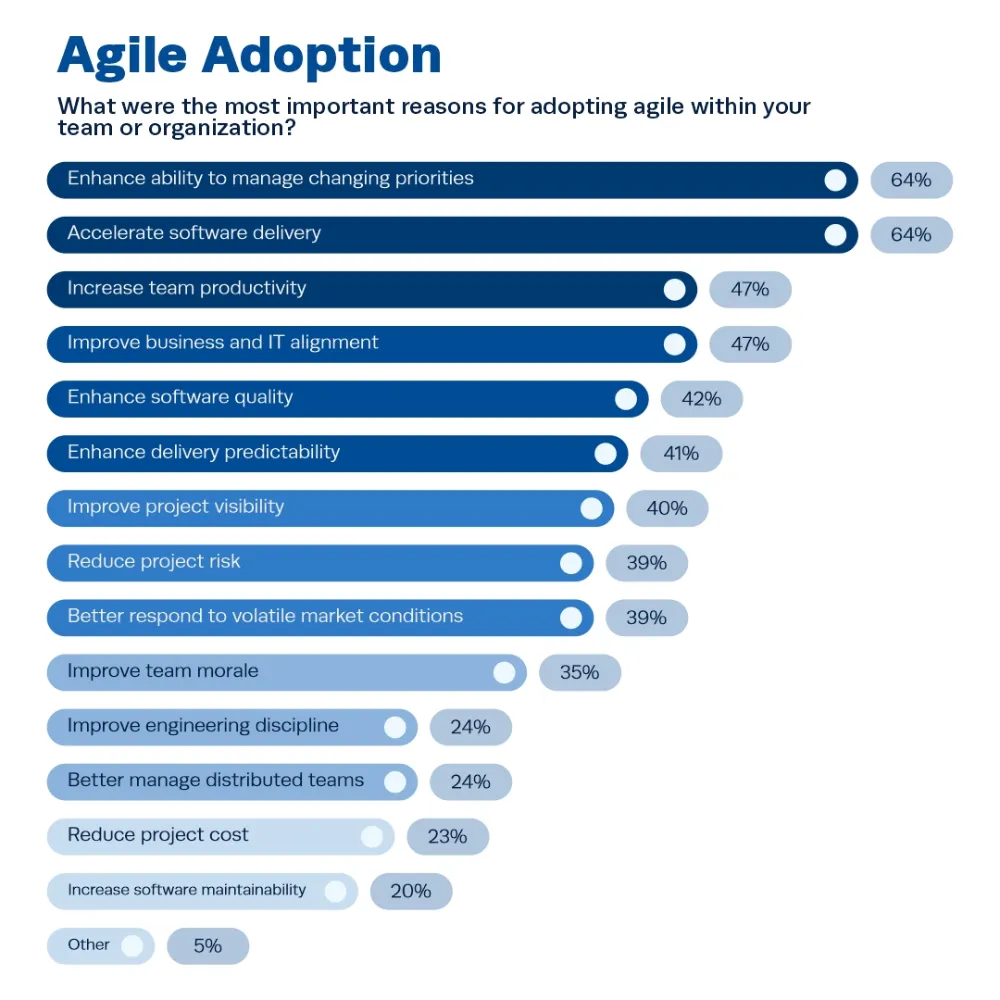
Multiple Agile methodologies exist, each with distinct practices and emphases. The three most widely adopted are Scrum, Kanban, and Extreme Programming.
Scrum structures work into fixed-length iterations called sprints, typically lasting two to four weeks. Teams commit to completing specific work during each sprint, then demonstrate results and reflect on improvements.
Scrum defines three roles. The Product Owner prioritises work based on business value and customer needs. The Scrum Master facilitates the process, removes obstacles, and coaches the team. The Development Team delivers work, typically consisting of five to nine members with cross-functional skills.
Sprint Planning starts each sprint, where the team selects work and creates plans. Daily Stand-ups provide quick coordination, with each team member sharing progress, plans, and obstacles. Sprint Reviews demonstrate completed work to stakeholders. Sprint Retrospectives focus on process improvement, with teams identifying what worked well and what to change.
The fixed sprint length creates predictable rhythm whilst the defined roles clarify responsibilities. Regular ceremonies ensure communication without excessive meetings. Time-boxing prevents perfectionism whilst maintaining quality through the Definition of Done. Organisations report delivery time reductions of 30-40% after implementing Scrum effectively.
Scrum suits teams developing products with evolving requirements where regular customer feedback improves outcomes. The framework works best when teams can dedicate full attention to sprint commitments without constant interruptions from outside work.
Kanban visualises workflow on a board showing work stages from start to completion. Unlike Scrum’s fixed sprints, Kanban supports continuous flow with work items moving through stages as capacity permits.
Teams create boards called Kanban boards with columns representing workflow stages such as “To Do”, “In Progress”, and “Done”. Each work item appears as a card moving across the board. Work-in-progress limits for each column prevent overloading and reveal bottlenecks. When a column reaches its limit, team members must complete existing work before starting new items.
The visual nature makes progress transparent to everyone. Team members see precisely what colleagues are working on, what’s blocked, and where capacity exists. This visibility enables better coordination without constant status meetings.
Start with existing processes rather than mandating wholesale change. Make all work visible so everyone understands the system. Limit work in progress to improve flow. Manage flow actively, responding when work stalls. Make policies explicit so everyone understands how work moves. Improve collaboratively through regular reviews.
Kanban excels for support work, maintenance, and operations where work arrives continuously rather than in planned batches. It also suits teams transitioning to Agile methodologies, as it requires less structural change than Scrum. Teams report reduced lead times of 40-60% and better predictability after implementing Kanban successfully.
Extreme Programming focuses on engineering practices that enable frequent releases and welcome changing requirements. XP assumes customer requirements will evolve and builds technical practices supporting constant adaptation.
Pair programming involves two developers working together at one computer. One writes code whilst the other reviews in real-time. This practice spreads knowledge, improves quality, and reduces defects by 15-20%.
Test-driven development requires writing automated tests before production code. Developers write a failing test, implement just enough code to pass it, then refine. This approach ensures comprehensive test coverage whilst preventing over-engineering.
Continuous integration means developers merge code changes multiple times daily. Automated builds and tests detect integration problems immediately rather than days or weeks later. Teams using continuous integration report 80% fewer integration defects.
Simple design principles prevent over-engineering. Teams build only what’s needed today, relying on refactoring and test coverage to enable future changes safely. Collective code ownership means any developer can modify any code, preventing knowledge silos and bottlenecks.
XP welcomes changing requirements more explicitly than other Agile methodologies. The engineering practices create safety nets enabling teams to respond to changes without degrading quality or increasing technical debt. This makes XP particularly valuable for projects facing significant uncertainty or rapidly evolving markets.
| Methodology | Best For | Structure | Change Handling | Team Size |
|---|---|---|---|---|
| Scrum | Product development with defined releases | Fixed 2-4 week sprints | Changes between sprints | 5-9 people |
| Kanban | Continuous delivery, support work | Continuous flow | Changes anytime | Any size |
| XP | Software requiring technical excellence | 1-2 week iterations | Frequent changes welcomed | Pairs and small teams |
Teams sometimes combine methodologies. Scrumban merges Scrum’s sprint structure with Kanban’s visual management. Many Scrum teams adopt XP’s technical practices for better code quality. The key is understanding each methodology’s principles rather than following practices rigidly.
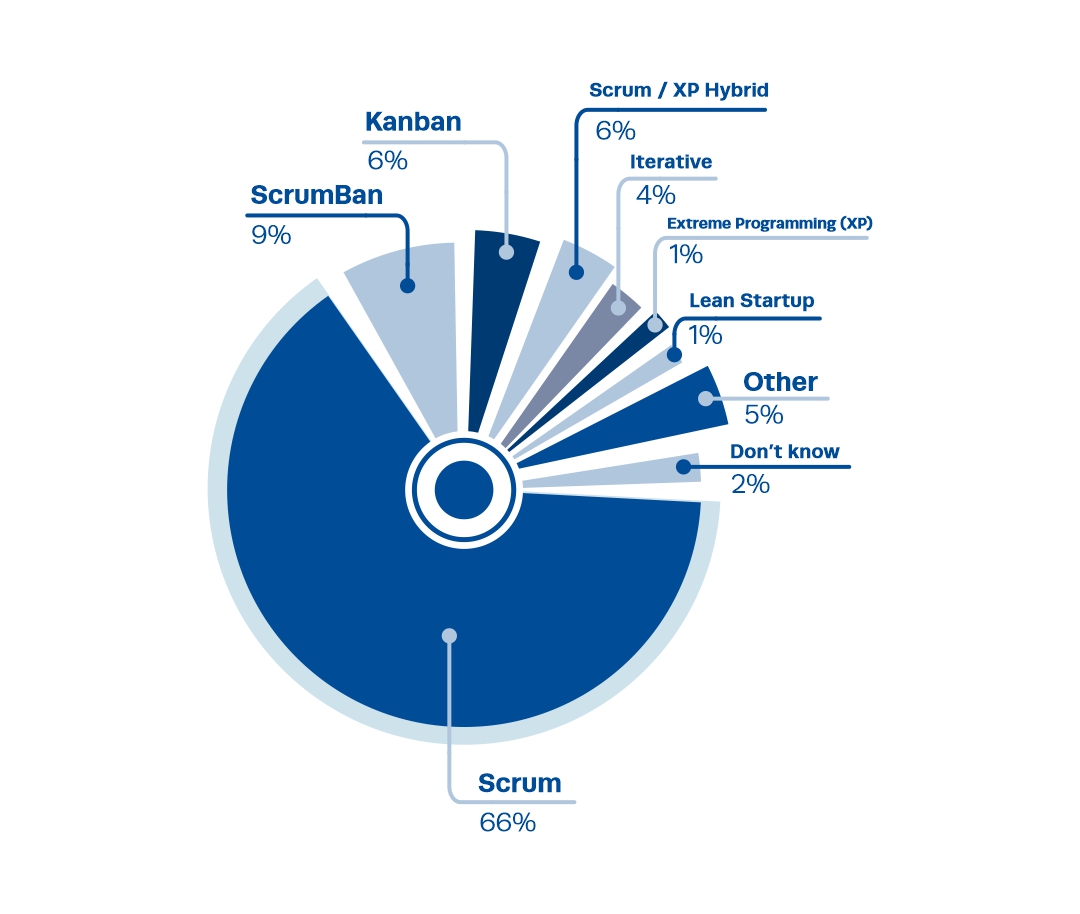
Agile methodologies deliver measurable improvements across multiple dimensions. Understanding these benefits helps organisations set realistic expectations and measure success.
Organisations implementing Agile methodologies report delivery time reductions of 25-50%. Working in short iterations means valuable features reach customers months earlier than traditional approaches. This speed provides competitive advantages in fast-moving markets where being first matters.
An Irish financial services company reduced product launch time from fourteen months to five months using Scrum. The shorter cycle enabled them to respond to competitor moves and capture market opportunities before they disappeared.
Counterintuitively, faster delivery often improves quality. Continuous testing, regular reviews, and incremental development catch defects early when fixing them costs less. Teams report defect reductions of 40-60% after adopting Agile methodologies.
Frequent releases also mean smaller changes per release, reducing risk. When problems occur, teams quickly identify causes because only small amounts of work changed since the last release.
Regular delivery means customers see progress frequently rather than waiting months or years. Early feedback ensures teams build what customers actually need. Studies show Agile projects achieve 65% higher customer satisfaction scores than traditional approaches.
A Dublin software company implemented Kanban for customer support systems. Response times decreased from four days to eight hours, whilst customer satisfaction scores increased from 68% to 91%.
Agile methodologies emphasise team autonomy and collaboration. Clear goals, regular wins, and continuous improvement create engaging work environments. Teams using Agile approaches report higher job satisfaction and lower turnover. The self-organising nature develops skills whilst the regular retrospectives ensure voices are heard.
Incremental delivery reveals problems early. Rather than discovering major issues months into development, teams encounter and resolve problems continuously. Regular stakeholder reviews ensure alignment, preventing wasted effort on unwanted features. This visibility reduces project failure rates by 50-70% compared to traditional approaches.
Markets change, competitors move, and customer priorities shift. Agile methodologies accommodate these realities through regular planning and reprioritisation. The flexibility means organisations respond to opportunities and threats quickly rather than following outdated plans.
Selecting an appropriate Agile methodology depends on your team’s context, not universal prescriptions. Consider these factors when deciding.
Product development with clear release goals suits Scrum. Continuous delivery of features or support work aligns with Kanban. Projects requiring technical excellence benefit from XP practices. Complex products might combine approaches, using Scrum for planning with XP practices for engineering quality.
Scrum works best with dedicated teams of five to nine people. Larger teams can use multiple Scrum teams with coordination frameworks. Kanban scales easily to any size because it focuses on workflow rather than team structure. XP’s pair programming works better with smaller teams where pairs can rotate frequently.
Some organisations embrace rapid change whilst others require gradual transitions. Kanban provides the gentlest introduction to Agile thinking because it starts with existing processes. Scrum requires more structural change but delivers faster results. XP demands strong technical discipline that some teams need time to develop.
Development teams with varying work types might use different methodologies for different work. New product development uses Scrum. Maintenance and support use Kanban. Technical improvement projects apply XP practices. The important principle is matching methodology to work characteristics, not forcing everything through one approach.
All Agile methodologies require customer involvement, but frequency and style vary. Scrum’s sprint reviews happen every two to four weeks. Kanban enables continuous feedback as work completes. XP assumes customer availability for rapid feedback multiple times per week. Choose based on stakeholder availability and preferences.
Teams new to Agile often begin with Scrum because its structure provides clear guidance. After gaining experience, many introduce Kanban elements for better flow or XP practices for technical excellence. Starting simple and adding complexity gradually leads to better adoption than attempting everything simultaneously.
Many organisations engage Agile coaches when starting. Coaches provide training, facilitate early iterations, and help teams overcome obstacles. The Institute of Project Management offers Agile certification programmes designed for Irish and European organisations, combining theory with practical application in participants’ own contexts.
Understanding Agile principles matters less than applying them effectively. These factors separate successful implementations from failed attempts.
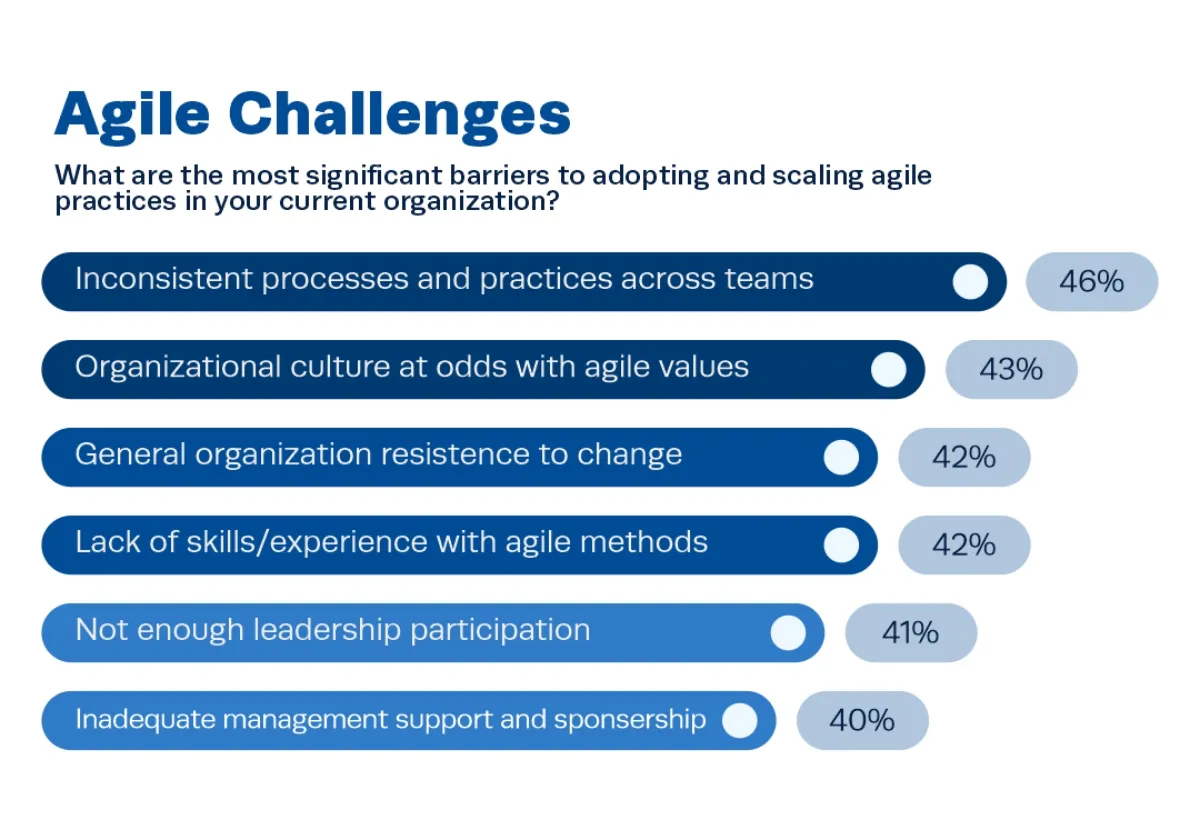
Agile methodologies require organisational change beyond team practices. Leaders must provide resources, remove obstacles, and reinforce Agile values when they conflict with traditional thinking. Implementations fail when senior managers demand Agile benefits whilst insisting teams follow traditional practices.
Support means allowing teams to self-organise rather than assigning tasks. It means accepting that plans change based on learning. It means measuring outcomes rather than adherence to original specifications.
Begin with one or two teams rather than organisation-wide rollouts. Early success builds momentum and provides learning opportunities. Pilot teams encounter and solve problems, creating knowledge that helps subsequent teams avoid mistakes. They also generate internal advocates who explain benefits to sceptical colleagues.
Effective Agile adoption requires proper training. Teams need to understand principles, not just follow practices mechanically. Scrum Masters benefit from formal certification ensuring they can facilitate teams effectively. Product Owners learn prioritisation techniques and stakeholder management. Development team members gain skills in estimation, collaboration, and self-organisation.
Teams sometimes adopt Agile ceremonies without understanding underlying principles. They hold stand-ups that take thirty minutes because they’re really status meetings. They conduct retrospectives but never change anything. They plan sprints but allow constant interruptions.
Successful teams understand why practices exist. Stand-ups enable coordination, not reporting. Retrospectives drive improvement. Sprint commitments protect focus. Understanding principles helps teams adapt practices to their context rather than following recipes blindly.
Agile methodologies challenge traditional management assumptions. The shift from command-and-control to self-organisation creates discomfort. The transparency reveals problems previously hidden. The emphasis on outcomes rather than outputs changes how organisations measure performance.
Successful implementations address these cultural shifts explicitly. They communicate why changes matter. They provide support for people adjusting to new roles. They celebrate wins demonstrating benefits. Cultural change takes longer than process change, requiring patience and persistence.
Teams should expect early iterations to feel awkward. Estimation proves inaccurate. Communication patterns need adjustment. Tool choices require refinement. This discomfort is normal and temporary. Regular retrospectives identify improvements whilst protecting psychological safety so team members freely discuss problems.
Agile methodologies are iterative approaches to project management and product development that deliver value incrementally rather than in single large releases. They emphasise collaboration, flexibility, and continuous improvement over rigid planning and comprehensive documentation.
Agile is an overarching philosophy based on values and principles. Scrum is a specific Agile methodology implementing those principles through defined roles, events, and artefacts. Think of Agile as the philosophy and Scrum as one way to practice it.
Choose based on work characteristics, not popularity. Scrum suits product development with clear release goals. Kanban works better for continuous delivery and support work. Extreme Programming excels when technical excellence is critical. Many teams combine elements from multiple methodologies.
Teams typically become comfortable with basic practices in three to six months. Real proficiency develops over one to two years as teams encounter various scenarios and refine their approach. Organisational transformation requires longer, typically two to four years for substantial culture change.
Yes. Marketing teams use Agile for campaign development. Construction companies apply it to building projects. Financial services use it for product launches. Manufacturing adopts it for new product development. Any work involving uncertainty, complexity, or evolving requirements benefits from Agile approaches.
The primary challenge is cultural change rather than learning practices. Traditional management styles conflict with Agile principles of self-organisation and team empowerment. Other challenges include inconsistent implementation across teams, inadequate training, and insufficient leadership support for necessary changes.
Agile improves quality through continuous testing, regular reviews, and incremental development. Defects are caught early when fixing them costs less. Frequent releases mean smaller changes per release, reducing risk. Customer involvement ensures teams build the right things, not just build things right.
Agile coaches help organisations and teams adopt Agile methodologies effectively. They provide training, facilitate early iterations, help resolve obstacles, and guide teams toward self-sufficiency. Coaches combine Agile expertise with change management skills to support transformation.
Yes. Popular certifications include Certified Scrum Master, Certified Scrum Product Owner, and various Agile project management certifications. Certifications demonstrate understanding of Agile principles and practices. The Institute of Project Management offers IPMA-accredited Agile certification programmes.
Yes. Organisations often adopt specific Agile practices before full methodology adoption. Regular retrospectives improve any team. Visual management provides transparency regardless of approach. Iterative delivery reduces risk even in traditional projects. Starting with individual practices often leads to broader Agile adoption.