IPM CPM Level 1
 IPM-AI


hamburger__close
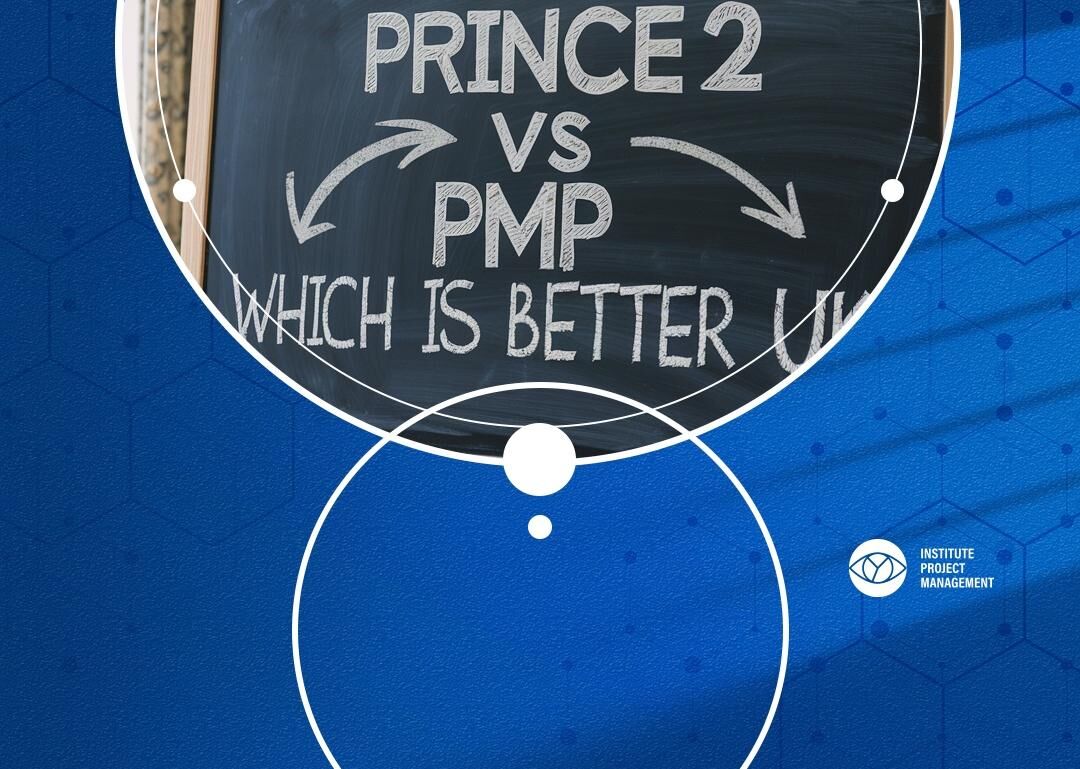
When weighing up PRINCE2 vs PMP, which is better for UK project managers depends almost entirely on your career stage, sector, and ambition. PRINCE2 is the dominant methodology-based qualification in the UK public sector and government contracting, while PMP is the globally recognised performance standard preferred by multinationals and consulting firms. Neither is universally superior. The right choice is determined by where you are now, where you want to work, and how much experience you already have. This guide, from a vendor-neutral awarding body with over 35 years of experience in practitioner education, provides a career-stage decision framework tailored to the UK market.
For most UK professionals entering the public sector, central government, or NHS, PRINCE2 is the more immediately practical qualification. For experienced project managers targeting senior roles in multinational corporations, management consulting, or global financial services, PMP carries greater weight. The two certifications are not in direct competition; they reflect different philosophies, different experience thresholds, and different employer ecosystems.
The table below captures the four most critical comparison points at a glance.
| Factor | PRINCE2 | PMP |
|---|---|---|
| Geographic recognition | Consulting, finance, and multinational corporate environments | Strong globally, especially USA, multinationals |
| Entry requirements | None for Foundation; no formal experience needed | 36 months PM experience plus 35 hours PM education |
| Exam format | Foundation: 60 MCQs; Practitioner: scenario-based MCQs | 180 questions; predictive, agile and hybrid scenarios |
| Best-fit sector | Strong globally, especially in the USA, multinationals | Public sector, government, infrastructure, IT in the UK |
PRINCE2, which stands for Projects IN Controlled Environments, is a structured project management methodology originally developed for UK government IT projects and now maintained by PeopleCert. It prescribes a specific process model with defined roles, themes, and principles, making it particularly appealing to organisations that value governance, documentation, and clear accountability. It is widely embedded in the UK public sector procurement and remains one of the most searched project management qualifications in British job postings. You can find a detailed breakdown of both levels in our PRINCE2 Foundation 2026 UK guide and our PRINCE2 Practitioner 2026 UK guide.
PMP, the Project Management Professional certification, is awarded by the Project Management Institute (PMI) in the United States and is recognised in over 200 countries. Unlike PRINCE2, PMP is not a methodology but a performance-based credential. It tests whether a candidate can apply sound project management practices across predictive, agile, and hybrid environments. It demands documented professional experience before you can even sit the exam, which fundamentally positions it as a mid-to-senior career credential rather than an entry point.

The most fundamental structural difference is that PRINCE2 is a methodology and PMP is a competency standard. PRINCE2 tells you how to run a project within a specific framework. PMP assesses whether you can manage projects effectively across a range of approaches. This distinction matters enormously when an employer is reading your CV, because it signals different things about your capabilities.
PRINCE2 has two principal levels: Foundation and Practitioner. Foundation is broadly accessible and requires no prior experience. The practitioner builds on the Foundation and tests the application rather than recalling. PMP, by contrast, is a single credential with a steep entry barrier: candidates must evidence either 36 months of project leadership experience (if they hold a four-year degree) or 60 months (with a secondary qualification), alongside 35 contact hours of formal project management education. The IPM certification overview sets out how different qualifications sit relative to one another across career stages.
Study commitment also diverges considerably. PRINCE2 Foundation typically requires 20 to 40 hours of preparation, while Practitioner adds another 30 to 50 hours. PMP candidates routinely report 150 to 250 hours of preparation across three to six months. The depth of that investment is reflected in the weight the credential carries in more competitive or globally mobile roles.
If you are ready to take the next step, IPM offers structured pathways for both qualifications. The PMP Passport programme is designed for experienced practitioners who want guided, efficient preparation without the noise of generic study materials. For those building or consolidating their PRINCE2 credentials, the PRINCE2 certification pathway provides both Foundation and Practitioner routes with practitioner-led instruction. Both programmes are delivered by an awarding body with over 35 years of cross-sector project management education experience across government, corporate, and consulting environments.
PRINCE2 remains deeply embedded in the UK public sector hiring. Central government departments, NHS trusts, local authorities, and defence contractors frequently specify PRINCE2 Practitioner as a minimum or desirable requirement in job descriptions. This is not simply tradition; it reflects the fact that many public sector organisations have built their governance frameworks, project registers, and reporting templates directly around the PRINCE2 structure. Holding the qualification signals an immediate ability to operate within those environments without organisational re-training.
For project managers seeking roles in global management consultancies, international banks, or technology companies operating across multiple jurisdictions, PMP carries greater recognition. Firms such as KPMG, Deloitte, HSBC, and large US-headquartered technology employers operating in the UK actively reference PMP in senior project and programme management roles. The credential also travels; if your career ambitions include working abroad or on cross-border programmes, PMP’s global portability is a material advantage that PRINCE2 cannot fully replicate. You can explore IPM’s approach to both through the PRINCE2 certification page and the PMP Passport course.
It would be misleading to discuss the UK project management market without acknowledging the APM Project Management Qualification. Reddit communities and professional forums consistently show UK practitioners actively weighing APM alongside PRINCE2 and PMP, particularly in engineering, construction, and infrastructure sectors. APM PMQ is widely respected by UK employers and recognised by the Chartered body. It is not the focus of this comparison, but dismissing it would misrepresent the real choices UK professionals face.
Salary data for project management qualifications in the UK must be interpreted carefully, because experience, sector, and seniority drive earnings far more powerfully than certification alone. With that caveat clearly stated, the pattern that emerges from UK job market data in 2026 is consistent: PMP-holding project managers tend to appear in higher-banded roles, reflecting the fact that PMP itself requires significant prior experience as a condition of entry. In other words, the salary premium is partly a credential effect and partly an experience effect.
PRINCE2 Practitioner holders in the UK public sector typically earn between £40,000 and £65,000, depending on seniority, organisation, and geography. London supplements remain significant. PMP-certified project managers in consulting or financial services commonly see packages from £60,000 into six figures at senior levels. The ROI calculation should therefore include not just certification cost (PRINCE2 Practitioner sits around £500 to £800 for exam and training; PMP preparation and exam fees typically reach £1,200 to £2,000 in the UK) but the career trajectory each qualification unlocks within your specific sector and experience band.
PMP is broadly considered more challenging than PRINCE2, and the evidence supports that view across multiple dimensions. The eligibility barrier alone filters out early-career candidates before a single question is attempted. The exam itself draws on a broad body of knowledge spanning the PMBOK Guide, agile frameworks, and situational judgement, and its 180-question format demands sustained concentration and the ability to think beyond rote recall into genuine applied judgement.
PRINCE2 Practitioner is not trivial; the scenario-based questions at the Practitioner level require genuine understanding of the methodology rather than memorisation. However, the bounded nature of the PRINCE2 framework means that preparation is more focused and the knowledge domain is more clearly defined. Candidates who have worked within PRINCE2-structured organisations frequently find the Practitioner exam confirms and formalises knowledge they have already been applying.
The honest answer is that difficulty is relative to your starting point. A seasoned project manager with fifteen years of experience may find PMP challenging but achievable within a few months of focused study. The same individual might find PRINCE2 Practitioner comparatively straightforward. For a project coordinator two years into their career, both credentials present meaningful preparation demands, but PRINCE2 Foundation is the more accessible starting point by design.
If you are in the first few years of your project management career, PMP is not yet accessible to you on its own terms. PRINCE2 Foundation or Practitioner is the logical starting point, giving you a credible, employer-recognised qualification that opens doors in the UK public sector and corporate environments alike. It also builds the documented experience that will eventually underpin a PMP application. The IPM blog carries guidance on building your PM career from this foundation stage.
This is where the decision becomes genuinely consequential. If your employer operates within UK public sector frameworks or is a government contractor, deepening your PRINCE2 to Practitioner level and potentially layering in Agile PRINCE2 or MSP for programme management is likely to produce faster short-term career progression. If your employer is a multinational, consultancy, or technology firm with global operations, investing in PMP now positions you for senior roles and international mobility. Holding both PRINCE2 Practitioner and PMP is increasingly common among senior UK project managers who operate across both environments.
At this career stage, the question is less about which qualification to start with and more about portfolio-building and credibility signalling. Many senior practitioners in the UK who already hold PRINCE2 Practitioner find that adding PMP strengthens their positioning for non-executive, consulting, or cross-sector roles. Conversely, PMPs with limited exposure to structured UK governance frameworks sometimes find that PRINCE2 Practitioner adds credibility when engaging with public sector clients. The Institute of Project Management supports professionals at every stage of this journey.
Yes, PMP remains a high-value qualification for the right candidate in the UK in 2026, but it is worth being precise about who that candidate is. The credential has maintained its global standing because PMI has continuously evolved the exam to reflect modern delivery realities, incorporating agile and hybrid approaches alongside traditional predictive methods. UK employers in consulting, technology, and financial services continue to cite PMP in senior project manager and programme manager job specifications.

The more pertinent question is whether PMP is worth it for you specifically, at your current experience level, in your sector. For a project manager with strong experience who is targeting international career mobility or senior roles in globally operating organisations, PMP in 2026 represents a sound investment of both time and money. For someone early in their career or firmly rooted in the UK public sector delivery, a PRINCE2 Practitioner will likely generate a stronger immediate return. Consulting the IPM certification overview is a practical starting point for mapping your options against your specific career context.
The most persistent mistake professionals make when comparing PRINCE2 and PMP is treating the question as a geographic one rather than a career-stage and sector one. The rule of thumb that PRINCE2 is for the UK and PMP is for everywhere else has never been entirely accurate, and it is increasingly unhelpful as UK employers become more internationally connected and hiring patterns become more complex.
A more useful frame is this: choose PRINCE2 Practitioner if you are building your foundation in project management, targeting UK public sector or government-adjacent roles, or working within an organisation that uses PRINCE2 as its internal delivery standard. Choose PMP if you have the required experience, are targeting senior roles in consulting or multinational environments, or want a credential that will remain credible regardless of which country or sector you work in next. And consider holding both if your career spans those worlds, as many of the most capable project managers in the UK do.
Whatever stage you are at, grounding your decision in honest self-assessment of your experience, sector, and ambitions will serve you better than any ranking. The PMP Passport and the PRINCE2 certification pathway are both designed to meet practitioners where they are and move them forward with rigour and clarity.
Choosing between PRINCE2 and PMP is not a question of which qualification is objectively superior; it is a question of which credential fits your experience, sector, and career ambitions most precisely. PRINCE2 builds governance-grounded foundations and opens UK public sector doors. PMP signals senior-level competency and global mobility. Used together, they represent a formidable professional profile. Visit the Institute of Project Management to explore which pathway suits where you are heading next.
| Key Aspect | What to Know | Why It Matters |
|---|---|---|
| Best for early-career UK professionals | PRINCE2 Foundation then Practitioner | Accessible entry point, no experience prerequisite, strong UK employer recognition |
| Best for UK public sector and government | PRINCE2 Practitioner | Directly embedded in UK public sector governance frameworks and procurement requirements |
| Best for multinationals and consulting | PMP | Best for the UK public sector and government |
| Best for senior UK practitioners seeking maximum credibility | PRINCE2 Practitioner plus PMP | Covers both UK structured governance and global performance standards across any sector |
It depends on your career stage and sector. PRINCE2 is better suited to early-career professionals and those targeting UK public sector, government, or NHS roles. PMP is the stronger choice for experienced project managers pursuing senior positions in multinational corporations, management consultancies, or globally operating financial services firms. Many senior UK practitioners hold both qualifications.
Generally yes. PMP requires documented professional experience before you can sit the exam, covers a broader and more complex body of knowledge spanning predictive, agile, and hybrid approaches, and involves a more demanding 180-question exam format. PRINCE2 Practitioner is not easy, but its knowledge domain is more clearly bounded, making structured preparation more straightforward for most candidates.
Yes, for the right candidate. PMP retains strong recognition among UK multinationals, consultancies, and technology employers, and its global portability adds long-term value for professionals with international ambitions. It is most worth pursuing if you already meet the experience threshold and are targeting senior or globally mobile roles. For those early in their career, PRINCE2 is the more immediately accessible and rewarding starting point.
PRINCE2 is exceptionally well recognised in the UK. It originated as a UK government standard and remains embedded in public sector procurement, NHS project governance, defence contracting, and many corporate IT environments. PRINCE2 Practitioner is one of the most frequently cited project management qualifications in UK job postings, making it a highly practical credential for professionals operating in or targeting UK-based roles.